Why Unsynced Breakbeats and an Alto Sax Work on Daniel Casares's Sounds of a Digital City
A Spanish Jazz Guitarist Fuses Digital Hardcore with Electronica Over Two and a Half Days
The first track Daniel Casares made for Sounds of a Digital City began with a riff on a distorted synth. Then he sequenced a breakbeat under it and put a wild alto saxophone solo on top. Daniel Casares, a jazz guitarist, composer and producer from A Coruña, Spain, released the eight-track album on 10 April 2026. It covers digital hardcore, electronica and experimental jazz in 14 minutes and 26 seconds.
Daniel Casares opens Sounds of a Digital City with strike up. That track sits in our Drum and Bass, Jungle, Liquid DnB playlist below, and Daniel Casares’s artist profile collects all our coverage. The album came to this desk through PopHits.Co Music Charts, which verifies independent artists and places their releases across its network of music news titles. Press play on the playlist, then read on for how the album is built.

Digital Hardcore Meets Jazz on Sounds of a Digital City by Daniel Casares
That opening track, strike up, sets the method for everything after it. The programming is tight and the saxophone is loose. Later, whole layers of sampled drums refuse to lock to the beat. That tension is why the record works, and it comes from a scene with a long and loud history.
The scene starts in Berlin. Atari Teenage Riot formed there in 1992. The band’s Alec Empire coined the term digital hardcore, and in 1994 it became the name of his label. The style joins the speed and attitude of hardcore punk to breakbeat, techno and drum and bass. Tempos are fast and the samples abrasive. Distorted guitar, real or sampled, sits next to samplers and drum machines.
Sounds of a Digital City steps into that world, but with one difference. The person at the controls is a jazz improviser. His own YouTube upload of the album explains the spark. It names his recent discovery of the masked duo Clown Core, and a further excursion into digital hardcore. So the album is a newcomer’s take on an idea more than 30 years old. The newcomer is a player trained to improvise inside a form.

Where Daniel Casares Fits as a Jazz Player in an Electronic Room
That training runs deep. Daniel Casares studied at Berklee College of Music from 2014 to 2018, under mentors including Kenny Werner and Mick Goodrick. As a student, he led a weekly set at the historic Wally’s Jazz Cafe in Boston. After that he spent a year in New York City as a sideman, then moved home to Galicia in 2019. He has performed alongside Dave Holland and Terence Blanchard and played festivals in Spain, Portugal and India. In 2022 he also completed a master’s degree at SOAS University of London.
Back home, he returned to the music he had loved before jazz, then found electronica and underground and experimental hip-hop. His first album as a leader, Idleness, came out in January 2021. He produced it himself, and also played every instrument on it. On HOUT Records he has since released the EP Villa Bonita in 2022 and From a Cabin in the Woods in 2023. Then came 1971 in October 2025, a futuristic homage to the jazz fusion of his younger years. Along the way, DownBeat, All About Jazz and NPR have all covered his music.
Two and a Half Days in a DIY Studio in Rural Galicia
Sounds of a Digital City came together fast. He recorded it in two and a half days, day and night, during a difficult period. Once he worked from midday until ten the next morning. He slept, woke and then went back to recording, losing track of time inside the soundscapes he was building. The raw material came from Glitch For Friends, a series of copyright-free sample libraries. He edited, resampled and reshaped those sounds. He rarely uses preset patches, because he builds most of his sounds himself.
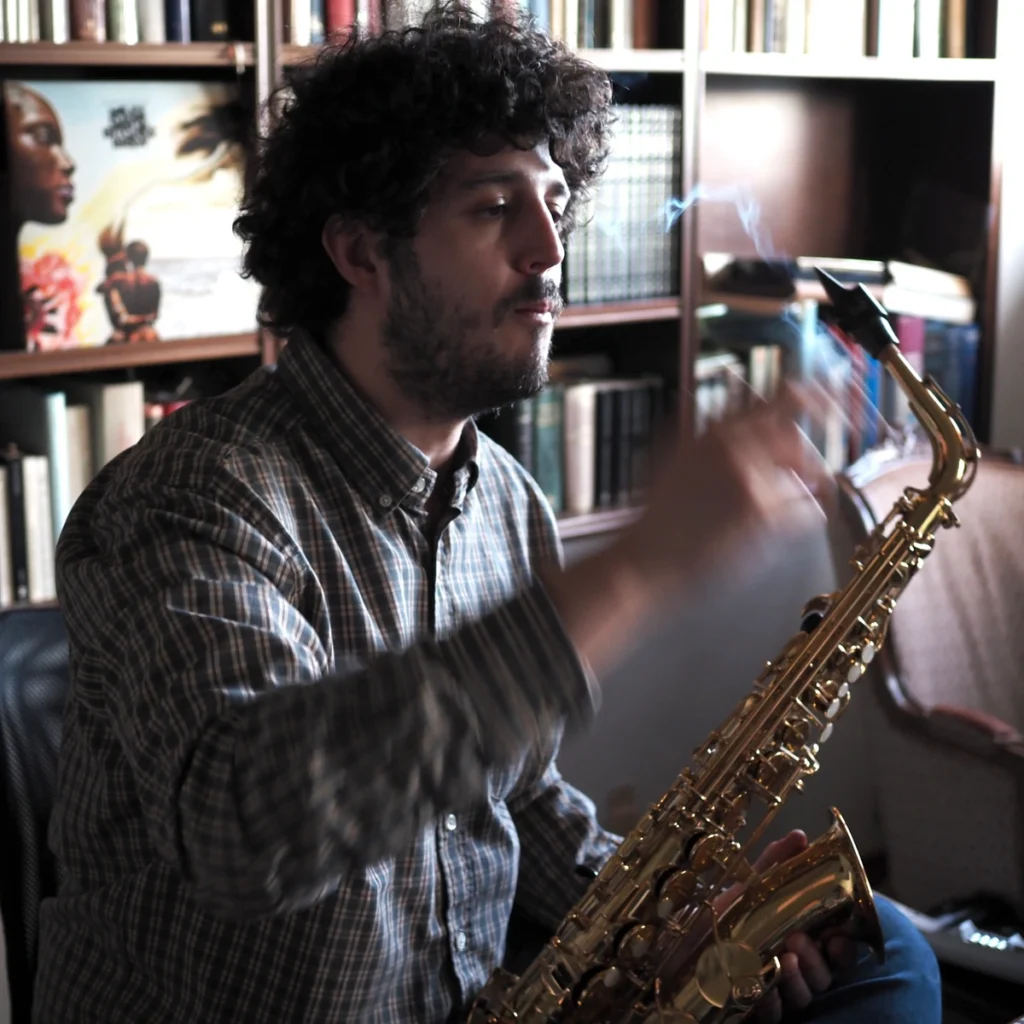
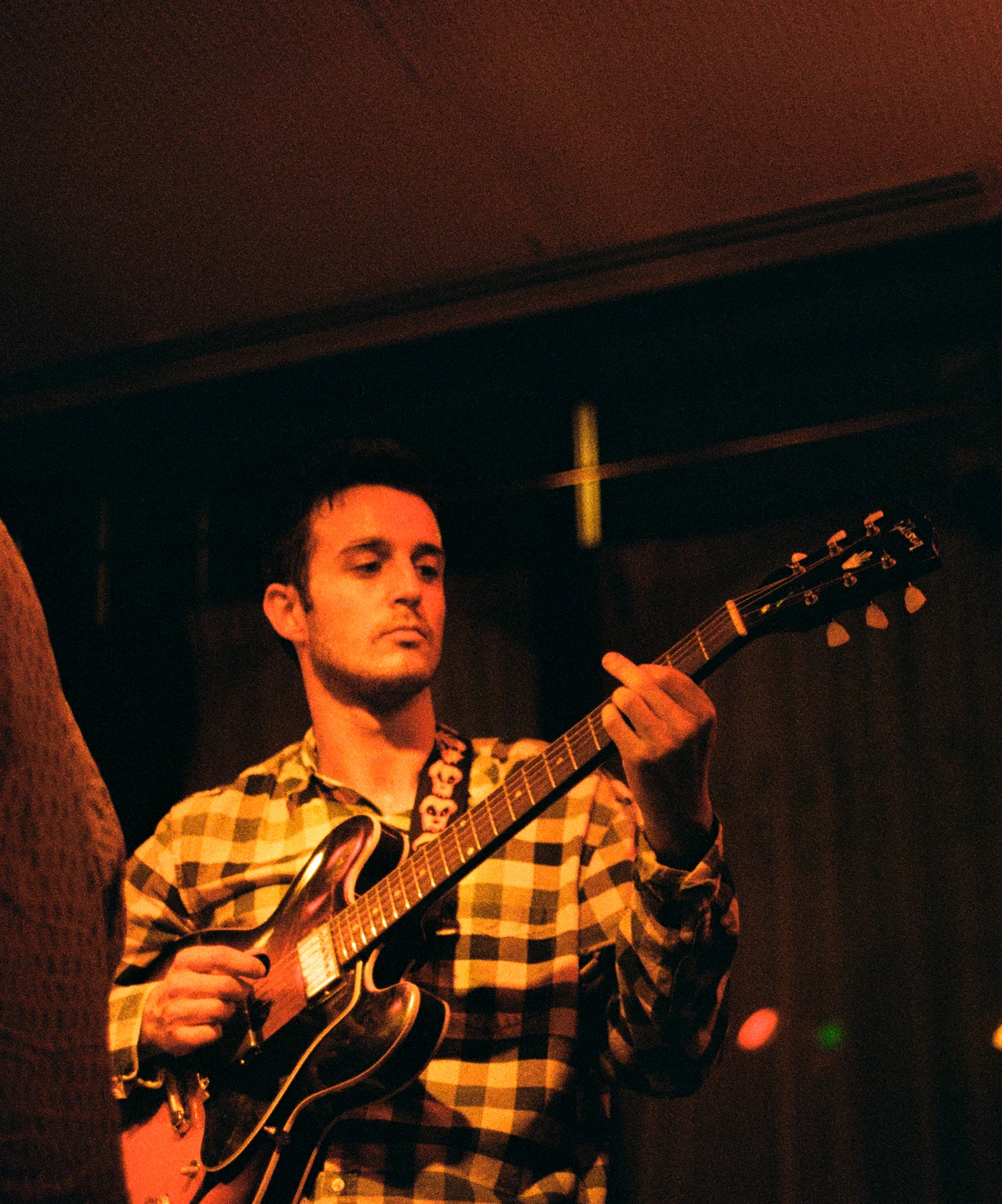
Daniel Casares, credited as Daniel Garrido Casares, composed and produced the album, playing alto saxophone, synthesizer, electronics and drums. He recorded his Lux alto saxophone through a Shure SM57 in his own DIY studio in rural Galicia. Most synth parts, by contrast, come from Kontakt and Reaktor, played live on a MIDI keyboard. But acoustic drums appear on one track only. On altered state, a busy beat from a Kontakt drum machine gives way to a half-tempo second part. There a Ludwig kit with Zultan cymbals takes over.

Breakbeats and Jazz Drums That Never Line Up
Then come the choices that make the album work. One of its central pieces is transforming. In its second half, an energetic breakbeat runs over a sample of fast jazz drums. He left the jazz drums out of sync with the breakbeat, so the two parts rub against each other. Meanwhile a two-note synth melody keeps the track moving forward. On engine, chopped samples of an underground digital hardcore track meet a jazz recording with saxophone. Then a relentless guitar solo arrives, roughened with a bit crusher.
Finally, the closer, doober, goes furthest. Its first part is direct, with a powerful bass, a fast breakbeat and a sax solo. An interlude of underwater samples follows, and its whale-like sounds are his alto saxophone through heavy reverb. Then the second part breaks a fast breakbeat up until it is almost free of rhythm. A copyright-free indie electronica type beat runs against it, and none of the parts line up. The artist calls the result tense, polyrhythmic and confusing, but still pastoral and accessible.
Clown Core and Squarepusher Sit Closest to Daniel Casares on Sounds of a Digital City
Brevity is the other link back to the act that started the album. Seven of the eight tracks run under two minutes, and only transforming is longer, at two minutes and 52 seconds. Clown Core is an anonymous duo who perform in clown masks. Their songs mix jazz, grindcore and noise, and rarely pass two minutes. First they released Toilet in 2018 with videos of the two playing inside a portable toilet. Van followed in 2020, filmed in a minivan. Daniel Casares keeps their brevity and their jazz-against-noise collisions. But he builds them from samples and programming in his own studio, not live in a cramped space.
Squarepusher reached the same meeting point from the club side. His second album, Hard Normal Daddy, came out on Warp in April 1997. It set nimble fretless bass and keyboard riffs over dense, churning drum and bass. Many now hear it as an early example of drill ‘n’ bass. One critic heard jazz fusion in it. A saxophone, the review said, would make it a drum and bass Weather Report. Sounds of a Digital City has the saxophone in. And on 1971, its maker had already paid his own homage to fusion.
Who Sounds of a Digital City Is For
The album suits listeners who follow electronic music into its harder, stranger corners. It also suits jazz fans curious about what an improviser does with a sampler. And it travels well beyond Spain, from Portugal and the United Kingdom to the United States, Japan and Brazil.
Start where he started, with the distorted synth riff of strike up. Then stay for the free jazz recording that fades in at the end of doober. It plays on alone, looping, until the record closes.
From the ElectronicMusic.News curator team: “We chose strike up for our drum and bass playlist. In 93 seconds it holds the whole idea. A distorted synth riff and a sequenced breakbeat meet an alto sax solo that will not sit still. It is the quickest way into the album.”
Stream Sounds of a Digital City and Follow Daniel Casares on Spotify, Instagram and YouTube
Stream Sounds of a Digital City on Apple Music and Bandcamp. Then follow Daniel Casares on Spotify, Instagram and YouTube, and find more of his work on his official website.






About The Author