

Why the Cinematic Build of The Sower by Alex Viegas Works on the Floor and on Screen
A Brazilian Film-Maker Scores His Own Science-Fiction Saga with a Melodic Techno Single
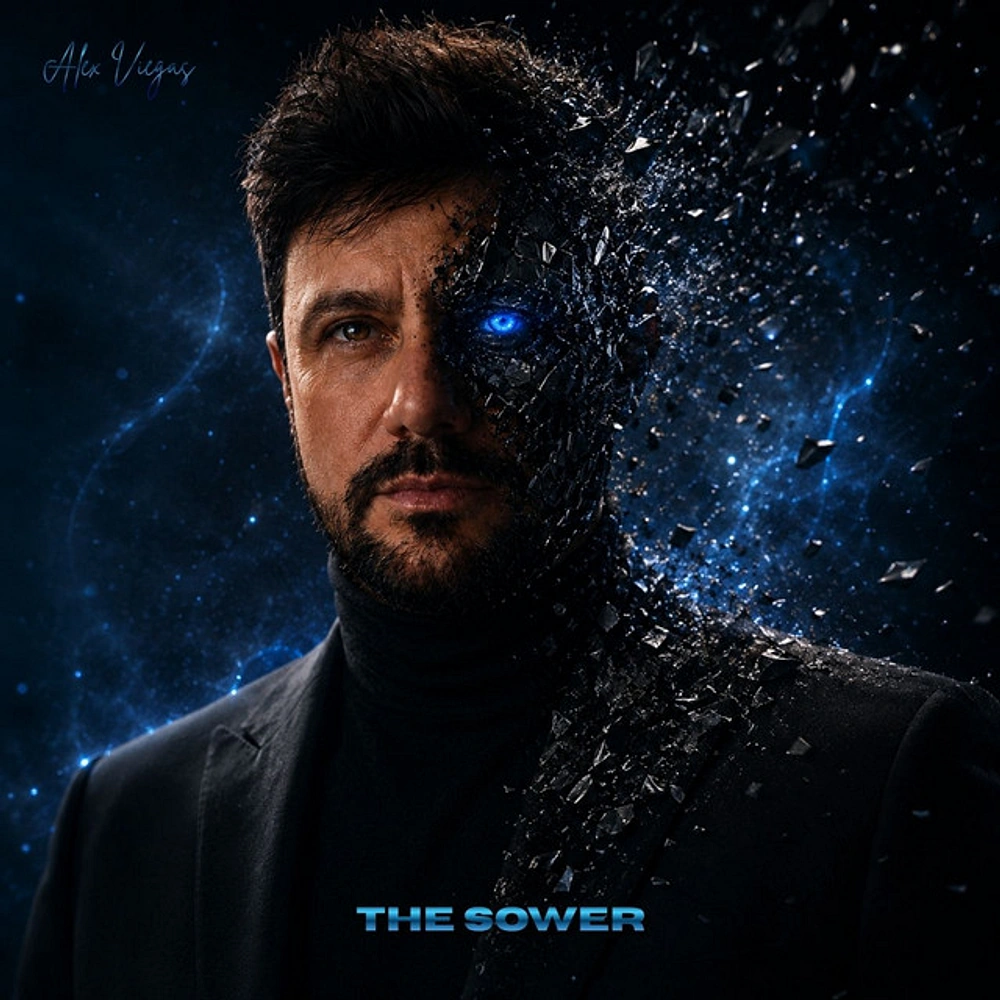
The Sower by Alex Viegas lists one name four times in its credits. He is the DJ, lead vocalist, producer and composer on the melodic techno single, which he released on 16 September 2026. It runs to five minutes and 41 seconds, and it scores a science-fiction story he first wrote in the 1980s.
Alex Viegas’s music is in our progressive house and electro house playlist below, and his full coverage history is collected on his artist profile. The Sower came to this desk through PopHits.Co Music Charts, which verifies independent artists and places their releases across its network of music news desks. Press play, then read on for how the build works.

Melodic Techno’s Turn Towards the Screen, and Why The Sower by Alex Viegas Arrives on Time
Melodic techno has spent the last decade moving towards the screen. The music still has to work on a system, with a steady kick and an arrangement a DJ can mix. Yet the biggest shows now sell a story as well as a tempo. Visual worlds, recurring characters and giant screens have become part of the format.
Tale Of Us helped set that template. The Italian duo of Carmine Conte and Matteo Milleri launched the Afterlife label in 2016. Its events were built around dark, film-like staging as much as the records. Milleri’s solo project, Anyma, pushed further, with shows built around enormous digital figures that eventually reached the Sphere in Las Vegas.
The Sower comes from the same instinct, approached from the other side. Viegas is a film-maker first, so the visual world existed long before the track did.

A Science-Fiction Saga First Written in the 1980s, Now Scored in Melodic Techno
The Sower Universe began as a story Viegas wrote in the 1980s. It then sat dormant for decades. He has since revived it through Bryan Stenler Studios, the company he founded in Bauru, Brazil, in January 2025. The studio works with visual effects, digital characters and AI-assisted production.
At the centre is the title figure, played by Viegas himself. He is a mysterious traveller who crosses devastated worlds carrying a seed that can restore life. The single turns that image into its arrangement. Whispered vocal fragments, an atmospheric opening and tribal textures come first. They then give way to a hypnotic melodic techno pulse and to wide passages built to suggest the scale of a science-fiction film.
The idea behind it is plain. “The Sower represents the idea that even when everything around us seems destroyed, something can still survive beneath the ashes. Sometimes all it takes is one seed, one signal, one spark of light to begin again,” says Viegas.


Where The Sower by Alex Viegas Fits Beside Anyma, Tale Of Us and the Film Festival Circuit
On the floor, The Sower sits with the darker, story-led end of melodic techno. Fans of the Afterlife approach will recognise the shape. The tension lives in the build, and the payoff is a sense of scale rather than a single peak.
On screen, Viegas brings a festival record most producers do not have. His Lunther: Stone by Stone won Best Visual Effects at the World Film Festival in Cannes. Meanwhile, his video for In the Shadows took the Audience Choice Award through the Lift-Off Global Network. That network is linked to Pinewood Studios in the UK. A Best International Film award in Kolkata sits alongside them, and his music videos count more than 120 official selections.
The universe also has a cast. Bryan Stenler Studios develops virtual talents and characters. They include the virtual actor Bryan Stenler, the survivor Enzo Ravenwood and the ancient villain Lunther Malakar. They recur across the videos and the songs, so each release adds to one story.
The Sower Universe Catalogue, From Luntherland to Worth the Climb on 16 October
The single is one part of a longer catalogue. Saga tracks such as The Cure, Celestial Odyssey (Remix), The Confrontation and Apollo sit beside songs about resilience and mental health. Those include Sick Humanity, Born to Shine and Digital Alienation. On his Spotify page, Sick Humanity, released in March 2026, currently leads the most-played list.
Since The Sower, the universe has also reached the dance floor. Luntherland, a dark melodic techno track with a Halloween setting built around the villain Lunther Malakar, arrived on 1 October 2026, as the studio’s news page sets out. Next comes Worth the Climb, a pop single built on orchestral textures and due on 16 October 2026. Its teaser follows the virtual actor Bryan Stenler on a mountain journey, which keeps the music and the story tied together.
ElectronicMusic.News’s curator team: “The Sower earns its length by holding back. The quiet, close passages make the wide sections feel larger. A film score uses the same trick to make a landscape shot land.”
For a first listen, try headphones before a big system. The contrast between the close and the wide passages is easiest to hear that way.
Stream The Sower on Spotify, then follow Alex Viegas on Spotify and Apple Music. Explore The Sower universe and the artist page. Keep up with new releases on the YouTube channel, Instagram, TikTok and Facebook.









About The Author