
Why Singing in Norwegian at 138 BPM Works for Mathias SB on Den Rette for Meg
A Hønefoss Songwriter Carries Norway’s Camp-Built Pop Craft Into a Summer Dance-Pop Single
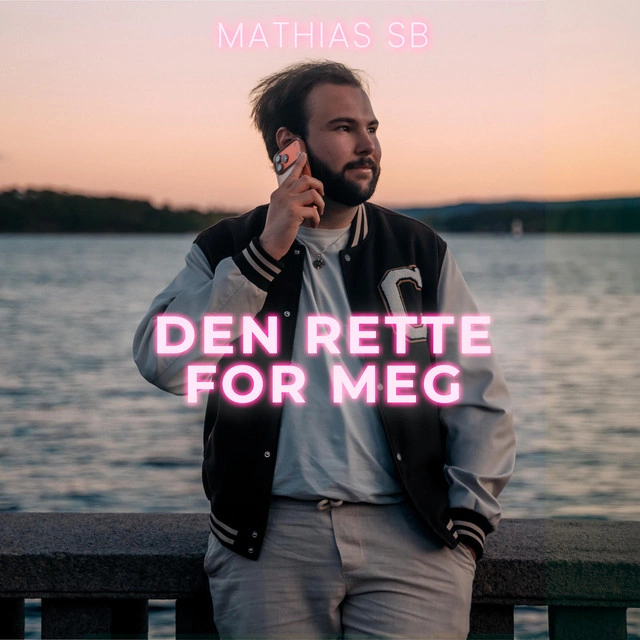
Den rette for meg runs at 138 BPM, eight beats a minute above the top of house music’s typical range. Mathias SB sings it in Norwegian. He released the single on June 19, 2026, as a second-chance love song for a summer floor. It is also a clean example of the songwriting-camp system Norway uses to write pop for Melodi Grand Prix.
Mathias SB’s Den rette for meg sits in the playlist below, next to tropical house, vocal dance and dance-pop picks, and the coverage so far lives on his artist profile. The single reached this desk through PopHits.Co Music Charts, which verifies independent artists and places their releases across its network of music news desks. Play it there first, then keep reading for the camp circuit behind it.

Songwriting Camps, Melodi Grand Prix and Russ Music Frame Norway’s Dance-Pop Mainstream
Start with the camps. Song Farm began in 2010, founded by Hilde Wahl and Jørn Dalchow, and two Norwegian publishers, daWorks Music Publishing and The Woods, now run it. The camp sets up mini studios in five houses at Saltögården, on Saltö island in Sweden. Each day, the organisers sort 30 songwriters and ten artists into new teams at breakfast, then play back the day’s songs at 10pm.
Rena Song Fest scales that model up. It first ran in the summer of 2024 in Rena, and it bills itself as the world’s biggest Eurovision songwriting camp. That first edition drew more than 150 songwriters and artists from 32 countries. Groups of three or four work together: one or two producers build the track, while two or three topliners write the melody and lyric. Each group finishes a song and a demo in a day, and then everyone rotates. The target is the national selections for the Eurovision Song Contest, including Melodi Grand Prix. The Woods, which co-organises both camps, also produces entries for Norway’s own selection.
Russ music covers the other half of the domestic picture. Since the mid-2000s, Norwegian school leavers have commissioned fast, synth-driven party tracks with heavy bass for the russ celebration. That season runs from late April to National Day on May 17. In 2014, NRK reported that one russ bus had spent almost 150,000 kroner on its songs. The electronic band Lemaitre also started out making russ tracks before building an audience with its own releases. As a result, Norway already has a home audience that knows fast dance music written for a specific crowd.

Where Mathias SB Fits in Norwegian Dance-Pop, From Jeg Trodde Aldri to Rena
Mathias SB is Mathias Støveren-Borgen, from Hønefoss, the administrative centre of Ringerike in eastern Norway. He writes in Norwegian and English and makes much of his music himself. According to Music Arena Gh, he started on guitar at 13. He still builds songs on a conventional pop frame before he scales them up into dance productions.
His local paper, Ringerikes Blad, has followed the early steps. His debut single, Jeg trodde aldri, came out in March 2024, written and performed by him. That summer he took part in the first Rena Song Fest, where, the paper reports, he found friends and contacts who helped him settle on his sound. By June 2025 the single had passed nearly 2,000 plays on Spotify. He also spent the week before his debut EP’s release at Song Farm Fresh in Strömstad, as an official artist.
That EP, Echoes of Us, came out on June 20, 2025, with four tracks: Let’s Raise a Glass, The Dragons Are Gone, an instrumental version of that song, and Turbulence. He described it as a relationship told in phases, from a bubbly start through a dreamy middle to turbulent spells in which the couple stays together. Fittingly, the running order opens on the toast and closes on Turbulence. He placed the sound between traditional pop and experimental dance and nu-disco, with digital pipa parts (the pipa is a traditional Chinese string instrument). Meanwhile, a producer from a parallel class at Eikli primary school co-produced the whole EP and asked to stay anonymous.
The 2026 Singles, and What Den Rette for Meg Does at 138 BPM
Then the Norwegian-language singles arrived. Veien du skal gå came out on February 20, 2026, and Music Arena Gh credits it with pairing Norwegian lyrics and commercial club energy. It now sits as the second track on the Den rette for meg release. Brage Gundersen produced the lead track, whose title translates as “the right one for me”. Mathias SB met him at a songwriting camp in Sweden, according to Melodic Dancers. The copyright line reads Mathias SB Music, so the release is his own.
The programming explains why a Norwegian lyric holds up at this pace. A playful phone call opens the track, and Melodic Dancers describes melodic synths, driving beats and a festival-ready drop. Iggy Magazine places that first drop at 1:10. Music Arena Gh hears a tense pre-chorus rising into a sing-along hook, followed by a reflective piano bridge ahead of the final drop. The guitar solo, which Iggy Magazine times at 2:22, comes from Tobias Fredriksen, a former folk high school classmate, according to Music Arena Gh.
The lyric carries one idea from start to finish. The singer wants to reconnect with someone from the past, still believes that person could be the right one, and hopes for a second chance. Because the phone-call opening states that problem at once, the story is in place before the biggest moments arrive.


Mathias SB Beside Kygo, Alan Walker and Subwoolfer, Three Norwegian Reference Points
Set against Norway’s biggest dance exports, those choices come into focus. Kygo, from Bergen, helped carry tropical house into the commercial mainstream in the mid-2010s, and he has described himself as primarily a pianist. Tropical house usually sits between 100 and 120 BPM. Den rette for meg keeps a piano but moves it: the bridge becomes a late breather before the last drop, at a much faster tempo.
Alan Walker, from Fana in Bergen, took melody-led electronic pop to multi-platinum certifications with Faded and a run of later singles. His records show how far a memorable synth line and a clear vocal hook can travel from Norway. The synth writing on Den rette for meg follows the same order of priorities, with melody first and the hook carried by the voice.
Subwoolfer is the camp-system reference. The Woods counts the trio’s Give That Wolf a Banana among the Norwegian selection entries it has produced. The song won Melodi Grand Prix in 2022 and then finished tenth at Eurovision with 182 points. It runs two minutes and 52 seconds, while Den rette for meg runs two minutes and 55. Both are short dance-pop tracks built around a single hook, which is the shape a song-a-day camp trains writers to finish.
So who is it for? Listeners in Norway who want party songs with a romantic storyline, and dance-pop fans elsewhere who are happy to follow a Norwegian lyric by feel. For DJs, it is a Norwegian-language option at 138 BPM, a tempo inside trance’s usual range rather than house’s.
The ElectronicMusic.News curator team: “The telling decision is the language. After the English titles of Echoes of Us, Mathias SB returned to Norwegian for both 2026 singles, and Den rette for meg shows why. At 138 BPM there is no time to translate a second-chance lyric, so he delivers it in the language his home crowd hears first.”
Stream Mathias SB and Follow the Norwegian Songwriter on Every Platform
Start with the Spotify player at the top of the page. Den rette for meg is also on Spotify as a two-track single with Veien du skal gå, and on Apple Music.
Keep up with Mathias SB here:
- Stream: Spotify, Apple Music and Deezer
- Watch: his YouTube channel
- Follow: Instagram, TikTok, Snapchat, Facebook and X









About The Author