

Juno Empire Seeds: Why a Film Composer's Analogue Synth Layering Works
A Tempe Home Studio, a Rack of Analogue Synths and Sixteen Months of Streaming
The first thing that registers on Juno Empire Seeds is the synth programming. It is warm, slightly detuned, and sits where a rhythm guitar would normally go. It carries the track rather than decorating it. That is a scoring instinct, not a band instinct, and it explains a lot about the Tempe writer and film composer behind the project, Alexander Thomas.
Juno Empire’s music is in the playlist below, and their coverage history sits on the Juno Empire profile. Seeds reached this desk through PopHits.Co Music Charts, which verifies independent artists and places their releases across its network of music news sites. Press play, then read on.

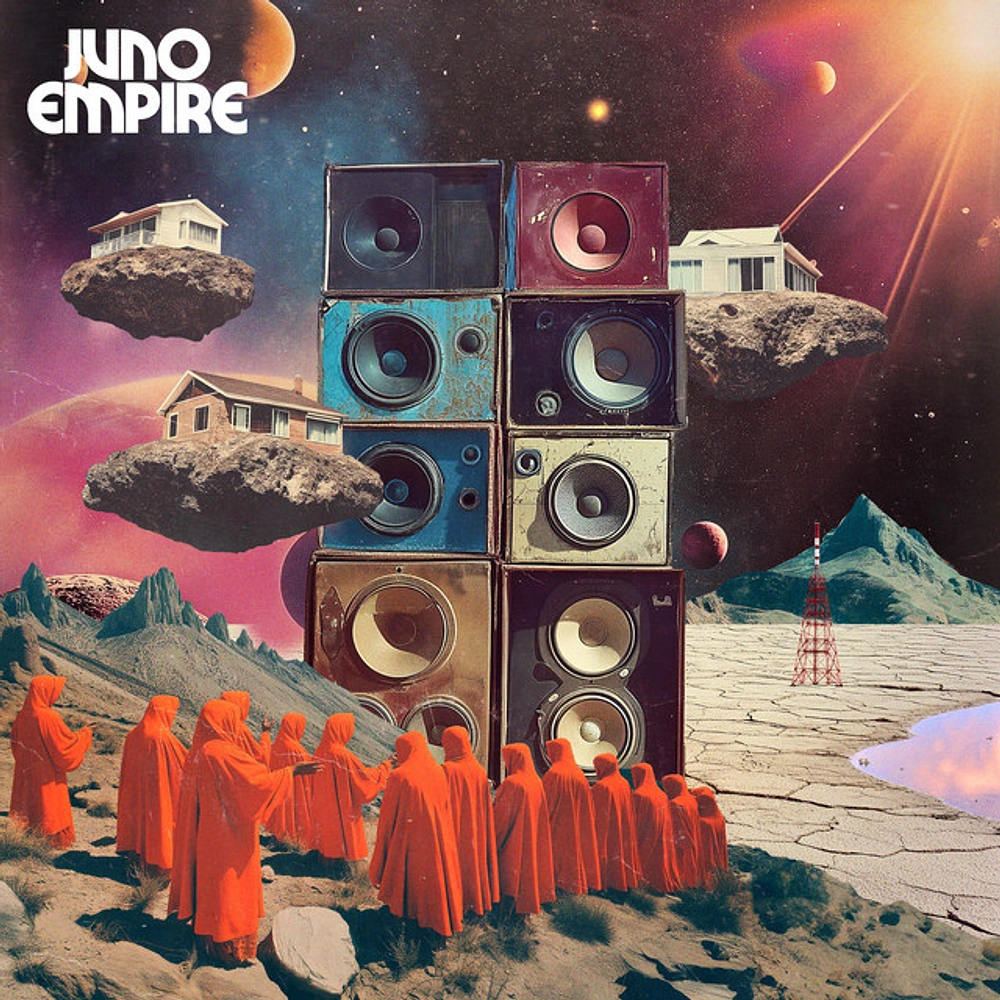
The Crossover Lane Where Guitar Writers Started Programming Like Producers
There is a lane that has been filling up steadily for a decade. Guitar writers stopped treating the synth as a texture laid over a band and started treating it as the arrangement itself. The tools made it easy. One writer with a controller and a handful of analogue units can now build a record that used to need a studio, a producer and a booking.
What separates the good ones is programming discipline. Anyone can stack pads. Making a synth line do the structural work of a rhythm section, holding tempo and harmonic movement at once, is a different problem, and it tends to be solved by people who arrived at the instrument from somewhere other than rock.
Alexander Thomas arrived from film. He scores for screen, and he has described himself as obsessed with analogue synthesisers, crediting them for the vintage eighties colour running through his records. Both facts matter. A scorer thinks in cues and in function: this element carries the scene, that one supports it. Applied to a pop arrangement, that produces tracks where nothing is present by accident. Juno Empire Seeds went out on 30 April 2025. Sixteen months later, writers are still picking it up.

What the Arrangement on Juno Empire Seeds Actually Does
Seeds opens on that detuned synth figure, then adds a bass line that moves rather than anchors. The bass is doing melodic work. That frees the synth to hold the harmony, and the vocal is then free to sit high and unhurried. It is a three-part division of labour. It is also why the track feels roomy at a tempo that would otherwise feel busy.
The vocal hook lands on the phrase “every moment”, repeated at intervals rather than hammered. Obscure Sound covered the track on release. It called the result a radiantly psychedelic pop delight and pointed at the bass undercurrent and the synth’s danceability as the load-bearing parts. Glam Glare and It’s All Indie both filed it the same week, and Lost in the Manor put it in a rock picks round-up the week after.
Thomas records and mixes at home, working with Andrew Lineweaver and Thomas Jacob Jr. That setup shows in the mix. No room ambience is doing the work, so every reverb decision is deliberate and the track sits forward without getting loud. Speaking to Mesmerized, he tied the writing back to the idea under the title:
“I realised time isn’t just something we pass through, but it passes through us, multiplying whatever we choose to become.”
The arrangement serves exactly that: a figure that keeps returning slightly changed.
ElectronicMusic.News’s curator team: “The tell on Seeds is the bass. Mute it and the track collapses into a pad and a vocal. It is doing the job a kick and a sub would do on a club record, which is why the arrangement holds up on a system as well as in headphones.”


Where Seeds Sits Between Tame Impala, MGMT and Air
Tame Impala is the reference most writers reached for, and the comparison is structural rather than cosmetic. Kevin Parker built that project as one person recording and mixing alone, and the sound is a direct consequence: everything glued, nothing negotiated. Thomas works the same way, and Seeds has the same close cohesion.
MGMT is the other name in the coverage, and it is the right one for the palette. Their early records made analogue warmth and a pop hook coexist without either winning, which is the balance Seeds is chasing.
The third reference is less obvious and more useful on this desk. Air reached pop from the same direction Thomas does, scoring film and then writing songs with a scorer’s economy. Their records prove analogue synth work can be lush and disciplined at once, and that is the register Seeds lands in.
So the audience is straightforward. Listeners who came in through psychedelic pop and stayed for the production. Anyone who works with hardware and wants to hear it used structurally rather than atmospherically. And readers here who care less about which genre box a track ships in than about whether the arrangement was thought through.
Where to Hear Juno Empire Seeds and Follow the Project
Seeds is out now. Start with the track on Spotify, with the rest of the catalogue on the Spotify artist page, on Apple Music and on Amazon Music. The official video sits on the YouTube channel.
Juno Empire posts on Instagram, TikTok and Facebook, and there is more at the official site. Sixteen months is long enough for most singles to drop out of rotation. This one keeps turning up, which usually means the arrangement was built to survive repeat listening.















About The Author